The Psychology Behind the Power of Silence After a Breakup
Jan 22, 2026
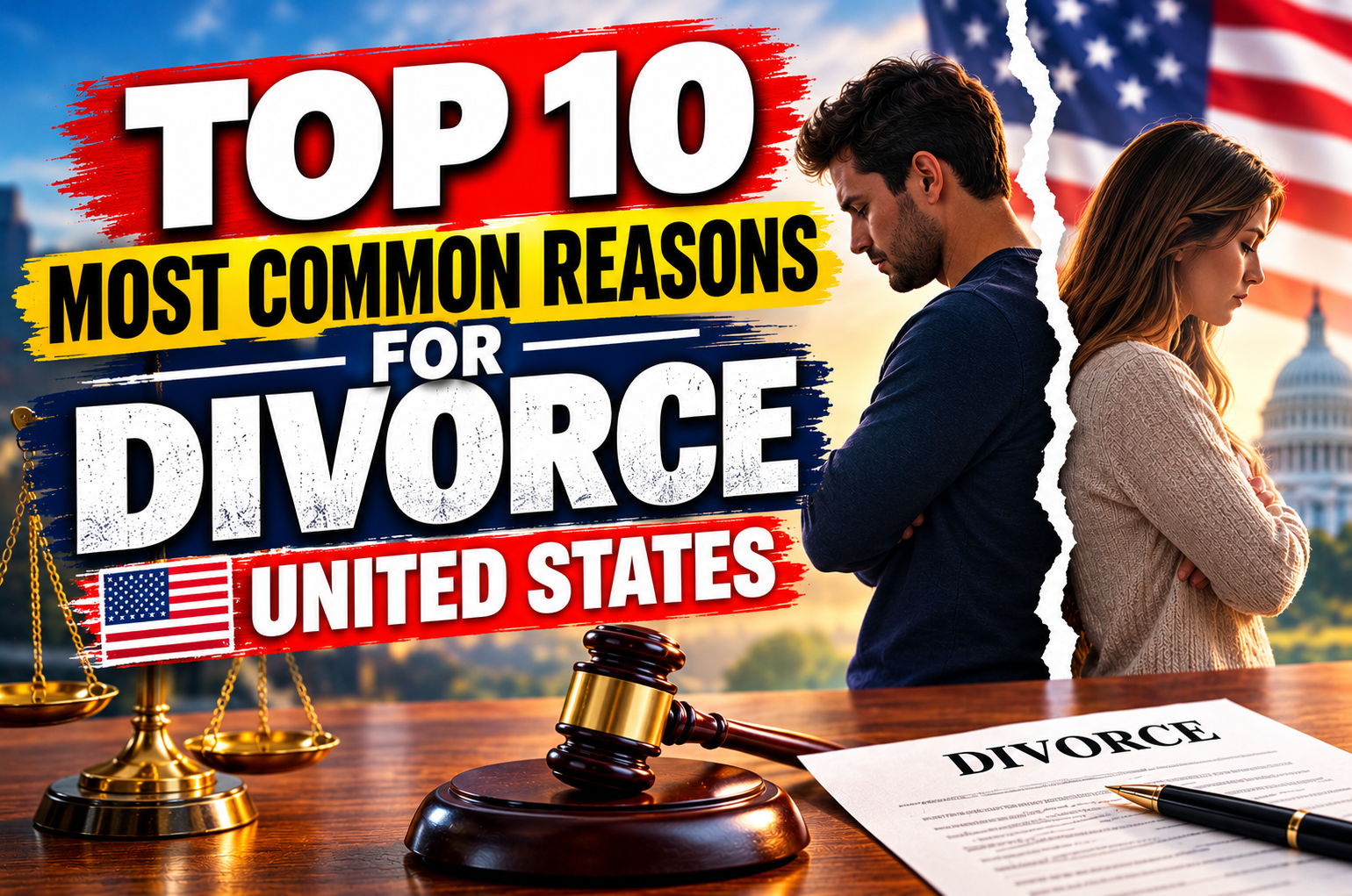
Most marriages don't end because of one huge fight. They end slowly, through small moments nobody fixed. If you're reading this, you might be worried about your own marriage. Or you might just want to know why so many couples split up. Either way, you're in the right place.
In this article, I'll walk you through the most common reasons for divorce in the United States. For each, you'll see what it looks like in real life, why it hurts a marriage, and what couples can do about it. You'll also find the latest divorce statistics and learn about the "final straw" moments that end a marriage forever.
Every marriage and divorce experience is different, yet national trends provide insights into what influences divorce rates. Studies have connected certain traits with an increased or decreased risk of divorce such as age at marriage, level of education achieved prior to marrying, financial security status and religion.
Early marriage often creates more financial strain and career changes than later marriages; this increases the chances of divorce significantly, especially without adequate premarital planning.
One of the leading causes of divorce is lack of commitment from both spouses. This may manifest itself in several forms: refusing marriage counseling sessions, emotional withdrawal, prioritizing personal interests over relationship goals or prioritizing them over each other. Unfortunately, this often creates a "demand-withdraw" cycle that's hard to break free from. Michigan marriage counseling centers such as Perspectives of Troy Counseling Centers offer evidence-based techniques that can help break couples out of destructive communication patterns.
The following list is based on one of the most cited studies on this topic. Researchers asked divorcees what caused the end of their marriage, and most people named more than one reason.
|
Reason for Divorce |
% |
|
Lack of commitment |
75.0% |
|
Infidelity |
59.6% |
|
Too much conflict and arguing |
57.7% |
|
Getting married too young |
45.1% |
|
Financial problems |
36.7% |
|
Substance abuse |
34.6% |
|
Domestic violence |
23.5% |
|
Health problems |
18.2% |
|
Lack of family support |
17.3% |
|
Religious differences |
13.3% |
Divorce is never an easy decision, yet many couples face problems within their marriage that ultimately become deal breakers. While Michigan only recognizes seven official grounds for divorce, there may be other factors which contribute to its end.
Lack of commitment is one of the main factors leading to divorce and can take various forms, such as disengagement, failure to plan future dates, and feeling unfulfilled by one another in their relationships. According to one long-term study, 75% of divorced people cited this reason for their marriage failure as being their cause.
Financial problems involve disagreements about spending habits, debt management, savings goals, income disparities and other challenges that create sustained stress. Financial issues can escalate into arguments which lead to breakdown in communication; furthermore they may cause irreconcilable differences and financial instability - one study has even discovered that 22% of divorces involve finances as one cause factor! A recent survey also discovered this correlation.
Though each couple's divorce experience is unique, studies over recent decades have identified common factors. These include lack of commitment, incompatibility, physical and emotional abuse (both physically and emotionally), substance dependency issues (drugs or alcohol addiction) and financial woes.
Failing to commit can take many forms: failing or refusing to attend marriage counseling sessions, avoiding difficult conversations, prioritizing one's personal interests over those of the relationship and prioritizing individual goals over those of both partners - these behaviors often lead to trust eroding and ultimately marital conflict.
Infidelity or cheating is another reason couples seek divorce. This may involve one partner engaging in physical or sexual liaison outside the marriage or engaging in emotional affairs outside the relationship - either way these behaviors are serious and can break trust and create feelings of betrayal within any marriage.
Here's what it can look like:
You live like roommates instead of partners.
Date nights stop, and nobody brings them back.
One person feels like they're the only one trying.
Big life plans no longer include "us."
Real-life example: Mark and Jen both work long hours. After a few years, they talk mostly about bills and who's picking up the kids. Nobody cheated and nobody yelled. They just drifted apart.
Studies show that ongoing marital discord and arguments are one of the primary factors leading to divorce. Disagreements about finances, parenting styles or other matters often come up in relationships and if these differences remain unresolved can result in feelings of resentment or even emotional withdrawal from either partner.
Couples sometimes drift apart over time and no longer agree on important matters like raising children or the kind of lifestyle they want to lead, which is known as incompatibility and can be grounds for divorce in states like Michigan where irreconcilable differences alone constitute grounds for dissolution of marriage.
Domestic abuse - physical or emotional - is another key contributor to many divorces, ranging from alcohol or drug addiction, verbal or emotional abuse and even financial manipulation and risky investments.
Signs of unhealthy marital conflict include:
The same fight happens over and over.
Name-calling, eye-rolling, or yelling.
Every time, one person stops and walks away.
Small problems blow up into huge fights.
When people consider reasons for divorce, infidelity usually tops their list. Even if the infidelity wasn't solely responsible, its effects can create feelings of betrayal that make reconciliation impossible.
Domestic violence plays an integral role in many couples' divorce decisions, whether it involves emotional or physical abuse by one partner. No spouse should ever lay a hand on the other.
Though couples can recognize the warning signs, avoiding an ugly divorce may still be difficult. Consulting a divorce mediation attorney may help mitigate the potential negative impacts of marital conflict or bad behavior on property division and custody agreements; an experienced lawyer could also provide invaluable assistance in gathering evidence which may aid during the divorce proceedings.
Financial difficulties are a primary factor for divorce in Herndon and Fairfax County, yet can also be the result of unreasonable behavior from either spouse. Spending habits often reveal emotional needs or insecurities within one spouse - perhaps spending on luxury items to boost social standing or self-esteem is their way of satisfying these emotional needs or insecurities.
Equally damaging is an individual spouse's drug or alcohol dependency on their marriage. An inability to quit using can compromise intimacy between partners, impair decision-making abilities and threaten employment prospects.
Divorcing too quickly can also create marital difficulties. Entering into marriage too quickly can create unrealistic expectations among couples who don't yet have enough relationship experience, leading to frustration and resentment that ultimately leads to divorce proceedings.
Common money traps:
Secret credit cards or hidden debt
One spender and one saver who never find a middle ground
Stress from job loss or medical bills
One partner controlling all the money
At present, couples tend to delay marrying for longer than ever, often for career or emotional development purposes. Unfortunately, this can create difficulties within marriage and may eventually result in divorce proceedings.
Infidelity is another frequent cause of divorce. Although some might view it as lack of commitment, its effects add another layer of hurtful feelings and emotional distress that complicate the proceedings for divorce.
Domestic violence is another common factor leading to divorce and needs to be handled carefully and compassionately in legal proceedings. An experienced family law attorney can assist with securing orders of protection and other critical documents necessary for ending a hazardous marriage.
People often associate substance abuse with drugs and alcohol abuse; however, addiction can take many forms; from sexual encounters to pornography viewing and gambling habits - any addiction has the power to negatively impact marriages. Addiction alters behaviors, compromises decision making abilities and can disrupt spousal intimacy if left unchecked.
Mental health disorders may also contribute to divorce. According to one study, those suffering from depression or anxiety were twice as likely to end their relationships than those without mental illness.
Spring EOP's team of treatment experts offer tailored programs designed to assist those struggling with substance use or addiction. Utilizing cognitive behavioral therapy and relapse prevention strategies, Spring EOP offers experience and expertise to help break free from their addiction. Don't wait - reach out now for a consultation appointment.
Studies have repeatedly highlighted domestic violence and abuse as key contributors to divorce. Abuse can take many forms: physical (punching, kicking, slapping), psychological (intimidation, threats or manipulation) financial/economic (controlling access to money or restricting employment opportunities) as well as stalking/harassment via social media or text messaging.
No matter the situation, anyone who believes their marriage has irreparably broken should seek legal guidance from an experienced divorce attorney. Hiring help ensures your interests will be properly represented during the divorce process. Contact Weaver, Bennett & Bland today to explore the available options in your situation - they provide invaluable guidance as you move forward; making such an important decision should not be taken lightly.
Studies have revealed that couples going through divorce often report issues with communication. This ranges from marital arguments and disagreements, to difficulties during negotiation processes for divorce settlement.
Disputes over small matters may seem minor at first, but repeated squabbling can erode trust between partners and lead to more serious problems in the future.
Communication is at the core of every successful marriage. Effective dialogue allows partners to discuss needs and expectations related to physical intimacy, family dynamics, finances and spousal responsibilities. Establishing an independent channel for speaking directly to one another - separate from those used with family and friends - can make things simpler while helping avoid arguments between them. Furthermore, such communication channels will prevent communication from becoming heated when discussing emotional topics such as property division or custody arrangements.
Since 2013, there has been an exponential increase in the number of people over 50 separating from their marriages - an experience known as gray divorce that is both complex and emotionally draining.
Some of the main factors driving gray divorce are infidelity, financial pressures and health challenges. Cheating can be devastatingly destructive to a marriage and hard to repair afterwards.
Financial issues may also lead to divorce, such as retirement planning or establishing fair spousal support payments. Chronic conditions can further erode relationships, especially when one partner has children from previous relationships.
As soon as you marry someone, it is essential that they realize they will not meet all your needs consistently and easily. Expecting them to do this can cause unnecessary disappointment and damage relationships over time.
Financial disagreements between couples can often become an issue, due to differences in spending or frugal behaviors, long-term goals that vary and other factors.
Unrealistic expectations about marriage can also contribute to its demise. Expecting that your partner should read your mind, avoid all conflict and change who they fundamentally are can all lead to disaster in any marriage. In order to address such concerns with your partner in a safe setting and devise ways of overcoming them if possible.
You can't control everything in a marriage. But you can control a lot more than you might think. Here are steps that actually help.
Premarital counseling is one of the best tools out there. A large survey found that couples who had premarital education reported more satisfaction, less conflict, and lower odds of divorce. Interestingly, 13.3% of divorced people in one study wished they'd had more preparation before marriage.
Check in daily. Ask "How are you really doing?" and listen.
Stay curious. Keep learning new things about your partner.
Say thank you. Small thanks go a long way.
Keep dating. Plan time together, even if it's just a walk.
Handle money as a team. No secrets, no surprises.
The most common reasons for divorce in the United States include; lack of dedication to the relationship; infidelity; continuous conflict; being married at a very young age; financial difficulties. Substance abuse, domestic violence, health issues, family pressure and the couple developing different interests or growing distant from one another complete this list.
They're all connected by one thing. Most couples don't break up overnight. Their relationship wears down gradually, and there will be some red flags as it does. However, the good thing is that most of those issues can be resolved if both individuals address them right away, and be honest with each other.
When you feel like your relationship is stuck, start taking action today. Have an honest discussion, schedule a counseling appointment, or check out some of the other relationship guides available for additional practical support.