Top 10 Most Common Reasons for Divorce in the United States
Sep 30, 2026
Love can bring great joy, but it can also bring confusion, worry, and pain. A small misunderstanding may grow into days of silence. Trust can become weak. One partner may feel ignored while the other feels blamed.
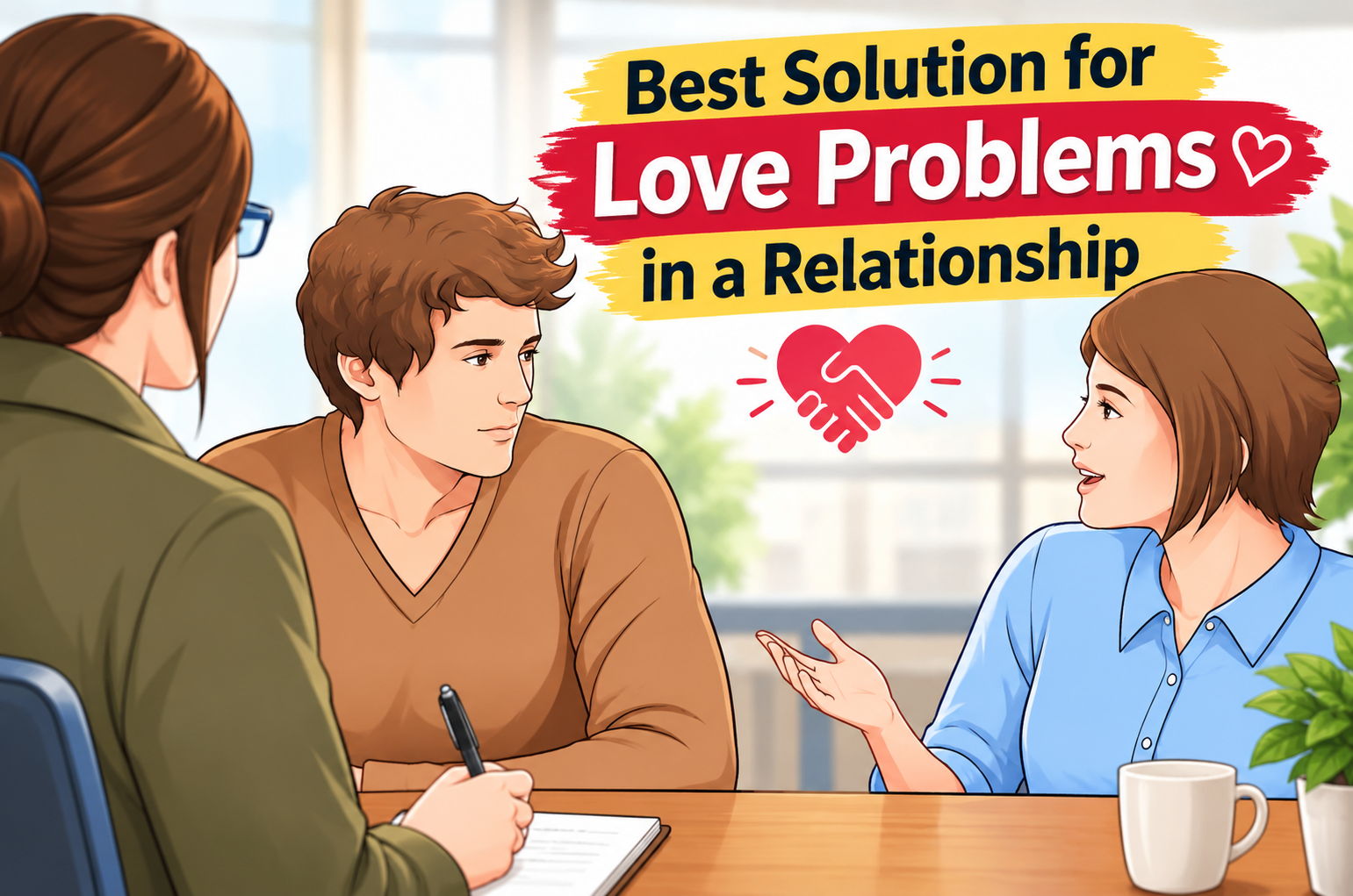
I am Astro Saloni from Vashikaran Solutions, and I have spoken with many people who feel lost in their relationships. Most of them ask the same question: What is the best solution for love problems in a relationship?
There is no single trick that fixes every relationship. The right solution depends on the real cause of the problem. In this article, I will help you understand that cause, start a calm conversation, rebuild trust, set healthy limits, and decide what to do next.
The best solution for love problems in a relationship is honest communication followed by steady action. Both partners should listen without blame, understand the real cause, rebuild trust through consistent behavior, and respect each other’s boundaries. Counseling or spiritual guidance may offer added support when the problem feels difficult to manage alone.
I know people often want a fast answer when they are hurting. They may want one message, ritual, apology, or promise to bring love back. Real healing usually takes more than one step.
A strong relationship problem solution begins when both people are willing to be honest. They must be able to talk about what happened, what they need, and what must change.
The American Psychological Association recommends open communication, kind discussion, active listening, and healthy ways of handling conflict. It also notes that repeated versions of the same fight may be a sign that professional help could be useful.
Here is a simple way to match the problem with a helpful first step:
|
Relationship problem |
Helpful first step |
What to avoid |
|
Poor communication |
Plan a calm, private talk |
Yelling or sending angry messages |
|
Broken trust |
Tell the truth and agree on clear changes |
Spying, threats, or false promises |
|
Jealousy |
Discuss the fear behind the feeling |
Trying to control friends or social media |
|
Lack of time |
Schedule regular time together |
Assuming love will maintain itself |
|
Family pressure |
Set shared boundaries as a couple |
Letting others make every decision |
|
Money conflict |
Review income, spending, and goals together |
Hiding debt or using money for control |
|
Repeated fights |
Focus on one issue at a time |
Bringing up every past mistake |
|
Abuse or intimidation |
Seek safe, private support |
Confronting an unsafe partner alone |
This table is a starting point, not a full answer for every couple. A solution works only when it fits the problem and protects the dignity of both people.
Love problems often look simple from the outside. A couple may argue about a phone call, a late reply, money, chores, or family plans. Under that small argument, however, there may be a deeper feeling.
One person may feel unimportant. The other may feel controlled. Both people may be reacting to pain without clearly explaining it.
Many couples talk every day without truly communicating. They discuss work, bills, children, and plans, but they do not talk about their emotional needs.
Unspoken feelings can slowly become resentment. Instead of saying, “I miss spending time with you,” a person may say, “You never care about me.” The second sentence sounds like an attack, so the partner becomes defensive.
Trust can break after cheating, lying, secrecy, or repeated broken promises. It can also weaken when one partner keeps checking the other person’s phone or questioning every friendship.
Jealousy is a feeling, but controlling behavior is an action. You can talk about feeling afraid or insecure. You should not use that fear to control where your partner goes, who they speak to, or what they wear.
Two people can love each other and still have different expectations. One may want marriage soon. The other may not feel ready. One may need frequent affection, while the other may need more personal space.
These differences do not always mean the relationship must end. They do mean that both people need an honest talk about needs, values, and future plans.
Money problems can create stress, especially when spending is hidden or one person controls every decision. Busy schedules can also make partners feel like roommates instead of a loving couple.
Differences around intimacy, parenting, religion, culture, or extended family can cause ongoing conflict. Common relationship concerns include finances, intimacy, time, trust, and jealousy. Healthy responses include honesty, consent, shared planning, and respect for time apart.
From my experience, the visible argument is often not the real problem. Before looking for a remedy, I encourage people to ask, “What feeling or need is hiding under this fight?”
Knowing the cause is helpful, but change comes from action. You do not need to solve your whole relationship in one night. Start with one calm and clear step.
Do not begin an important talk when either person is shouting, exhausted, or under the influence of alcohol or drugs. Take time to breathe, walk, pray, write down your thoughts, or sit quietly.
A break should not become punishment. You can say, “I want to talk about this, but I need 30 minutes to calm down. I will come back at 7:00.”
Do not mix a late reply, last year’s vacation, an old friendship, and every family argument into one conversation. Choose the issue that needs attention now.
For example, say, “I want us to talk about how we handle money this month.” This is much easier to understand than, “You ruin everything.”
Talk about your experience instead of judging your partner’s character. A gentle opening can lower defensiveness and make it easier for both people to listen.
Try this simple pattern:
“I feel worried when plans change and I do not hear from you.”
“I need clearer communication.”
“Can we agree to send a short message when either of us will be late?”
A soft start, clear description, polite words, and “I” statements can help couples manage conflict without blame.
Listening does not mean waiting for your turn to speak. Put the phone away. Let your partner finish, and then repeat the main point in your own words.
You might say, “I hear that you felt left out when I made that decision without you. Is that right?” Understanding a feeling does not mean you agree with every detail. It means you care enough to hear the other person’s view.
A useful apology names the action and its effect. “I am sorry you got upset” places the problem on the hurt person. A better apology is, “I am sorry I hid that message. I understand why it damaged your trust.”
Then explain what will change. An apology without changed behavior soon loses its value.
End the talk with a small, realistic plan. You might agree to have a 15-minute check-in each evening, review the monthly budget together, or stop using insults during arguments.
Write the agreement down if needed. Review it after one or two weeks. A clear plan turns good intentions into behavior you can both see.
Imagine that Maya feels ignored because Chris spends every evening on his phone. She could accuse him of not loving her, but that may start another fight.
Instead, she says, “I feel lonely when we sit together but do not talk. Could we put our phones away during dinner three nights a week?” Her request is clear, fair, and easy to follow.
Trust does not return because someone says, “Believe me.” It returns when words and actions match over time. The person who caused the hurt must be patient, honest, and willing to answer fair questions.
The hurt partner also needs room to express pain. However, rebuilding trust should not become endless punishment, daily interrogation, or control over every part of the other person’s life.
A boundary explains what you will accept and what you will do if that limit is crossed. It is not a threat used to frighten or control another person.
For example:
“I will not stay in a conversation where I am being insulted.”
“I need honesty about contact with a former partner.”
“I will discuss money, but I will not give up all control of my income.”
“I need private time with my friends and family.”
“Physical affection must always be wanted by both people.”
Healthy partners may not like every boundary, but they respect the other person’s right to have one.
Big romantic gestures can feel good, but small habits often create lasting closeness. Ask how your partner’s day went. Give thanks for a helpful act. Keep a promise. Spend time together without a screen.
Try one new activity each month. Cook a meal, take a walk, visit a new place, or learn a skill together. Shared experiences can bring fresh energy into a relationship that feels stuck.
After both people are calm, return to the disagreement. Share what you felt, explain how you saw the event, and listen to your partner’s experience.
Take responsibility for your part and discuss what you can do differently next time. A useful repair talk focuses on understanding, ownership, and prevention rather than proving who won.
As Astro Saloni, I see astrology and spiritual practice as tools for reflection. A birth chart reading may help someone think about emotional patterns, communication habits, or times of stress.
Spiritual guidance should support patience, self-awareness, and better choices. It should never be used to control another person, remove consent, or guarantee that someone will return. No ethical adviser can promise a fixed result because every person has free will.
Prayer, meditation, mantra practice, or quiet reflection may help you become calmer. That calm can support a better conversation, but it does not replace honest communication, medical care, legal advice, or licensed therapy when those services are needed.
Some problems can improve through communication and daily effort. Other situations need trained support. Repeated fights, deep resentment, betrayal, grief, sexual concerns, or a major life change may be easier to handle with a licensed couples therapist.
Marriage and family therapists work with concerns such as marital conflict, anxiety, depression, and family problems. Their work is often goal-focused and centered on relationship patterns.
You may want professional help when:
You keep having the same fight without progress.
Trust has been badly damaged.
One or both partners avoid every serious conversation.
Anger is affecting children, work, sleep, or health.
You are unsure whether to stay or separate.
One partner is dealing with addiction or serious mental distress.
Couples counseling works best when both people can speak freely and safely. If there is abuse, joint counseling may not be the right first step.
Normal conflict is not the same as abuse. Abuse involves a pattern of power, fear, control, or harm.
Warning signs can include:
Threats or physical violence
Forced or pressured sexual activity
Constant insults or public humiliation
Extreme jealousy and monitoring
Isolation from friends or family
Control of money, work, school, or transportation
Destruction of belongings
Threats involving children, pets, or weapons
If these things are happening, do not focus only on improving communication. Put safety first and seek private support.
Leaving is also a valid choice when respect, honesty, safety, or willingness to change is missing. Ending a relationship does not always mean you failed. Sometimes it means you accepted what the situation could not provide.
The best solution for love problems in a relationship is to understand the true cause, speak without blame, listen with care, and make clear changes. Trust grows through steady actions, not pressure or promises alone.
I believe spiritual guidance can help you reflect on your emotions and choices. Still, a healthy love problem solution must respect truth, consent, safety, and free will. It should help you think clearly rather than make you dependent on fear.
Choose one step you can take today. Plan a calm talk, set a needed boundary, arrange time together, or contact a licensed counselor. If you would like personal spiritual guidance, you can contact astro saloni for a private consultation. Results cannot be guaranteed, but your situation can be approached with care, honesty, and respect.